Why am I getting a letter from the IRS in 2026? The IRS sends notices for many reasons, including a balance due, a changed refund, a question about your return, or an identity check. The notice number and instructions help identify the issue. Unexpected IRS mail can be stressful, but a letter does not automatically mean bad news or an audit. Some letters require no action, while others have deadlines you must meet. A letter you receive in 2026 may also concern an earlier tax year.
Common Reasons the IRS May Send You a Letter
A balance the IRS believes remains unpaid.
Changes to a return, credit, or refund
A request for additional information
Identity or tax-return verification
An apparently missing tax return
Differences between reported income and third-party records
An examination or collection matter
How to Find Out What Your IRS Letter Means
Start with the CP notice or LTR letter number in the right corner. Then note:
Tax year: It may be earlier than 2026.
Issue: What the IRS found or needs.
Amount: Any balance, refund change, or proposed change.
Deadline: The date to pay or respond.
Requested action: Pay, send documents, verify identity, or nothing.
Search the number using the official IRS notice lookup. If it does not appear or looks suspicious, the IRS directs you to call 800-829-1040.
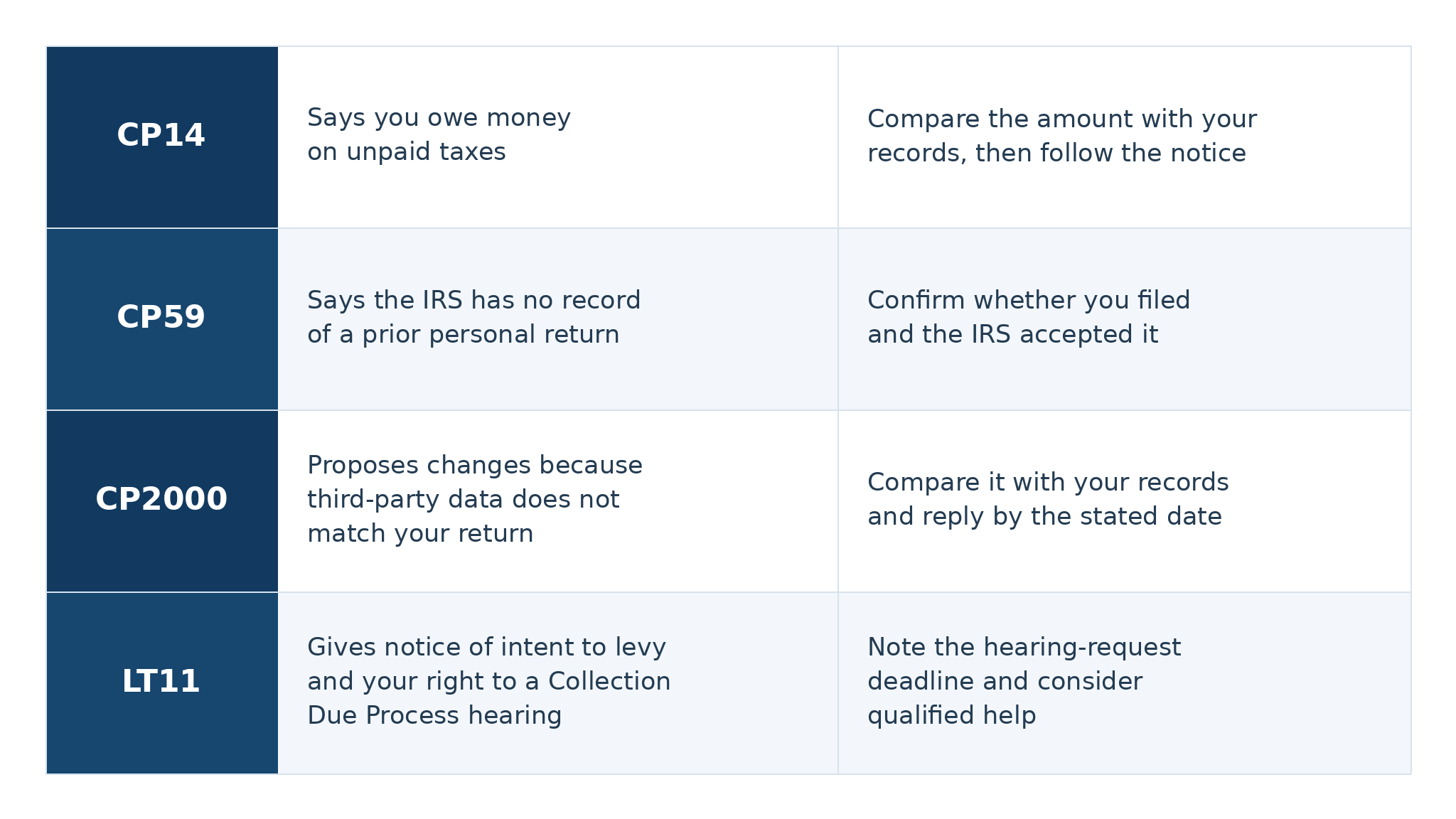
Common IRS Notices and What They May Mean
The IRS says a CP2000is not a bill. It proposes changes that may raise, lower, or not change your tax, and it is not automatically an audit notice. An LT11 warns that a levy (legal seizure of property) may follow if you don’t resolve the balance. It is not the levy itself. These are examples, not a mandatory sequence.
How to Check Whether an IRS Letter Is Real
Find it independently.Search the notice number on IRS.gov or sign in to your IRS Online Account, where certain notices appear.
Compare details. Check the name, tax year, and amounts against your records.
Verify contact details. If you cannot confirm a letter is genuine, use IRS.gov contact details before sharing sensitive information. A logo, envelope, QR code, or notice number does not prove authenticity.
Know the warning signs.The IRS says it normally contacts you by mail and emails or texts only if you opt in. Be wary of unexpected calls, emails, or texts demanding payment or personal information. For a suspected IRS letter scam, check the IRS scam guidance.
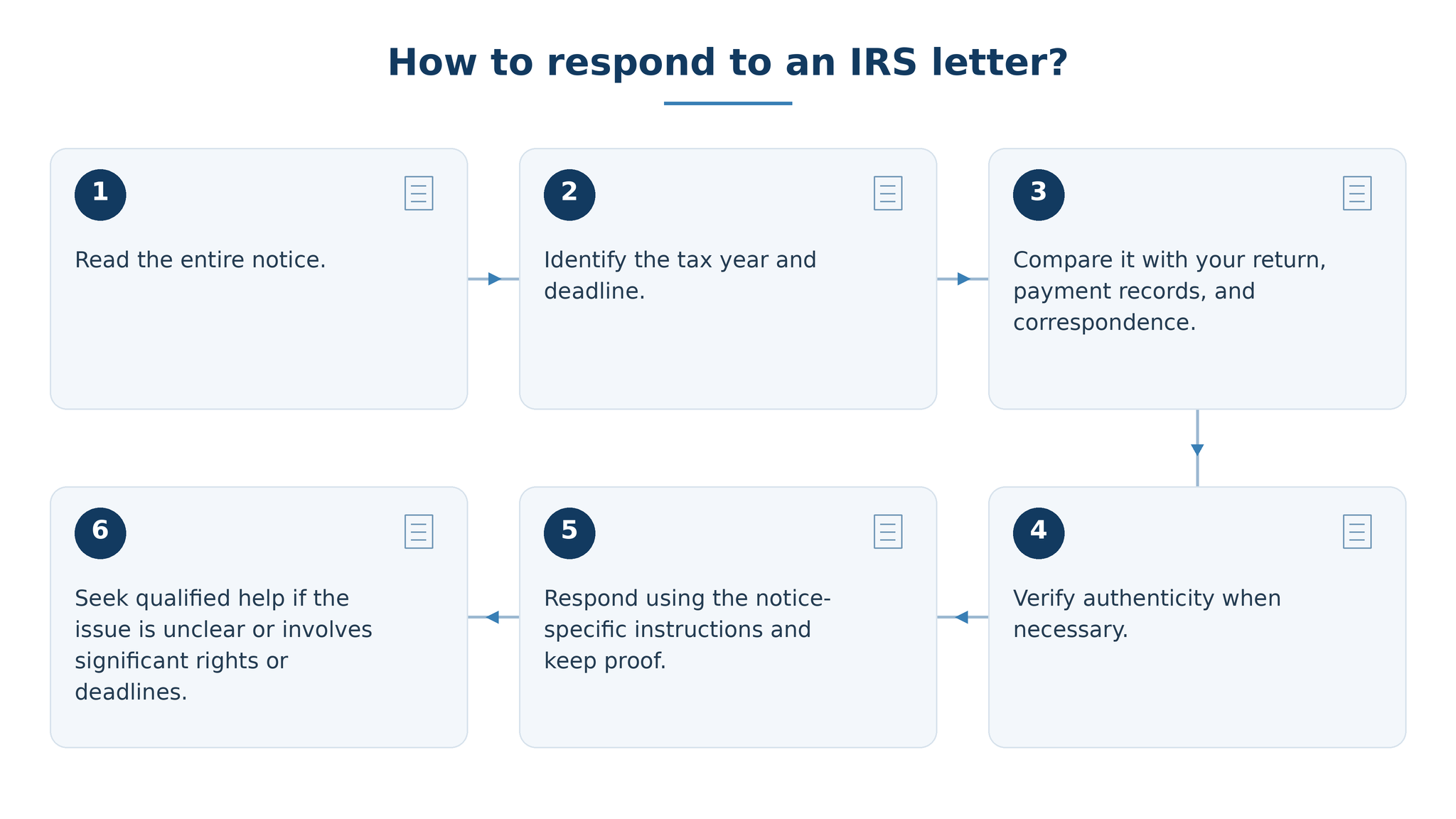
What Should You Do After Receiving an IRS Letter?
Some informational notices require no response, while others require action. If you disagree, follow the dispute instructions with supporting records. The IRS says replying by the due date helps preserve your appeal rights, and appeal rights vary by notice. Some notices allow phone disputes; others require a written response or appeal.
What If the Letter Says You Owe Money?
First, confirm the balance is correct. A payment may not yet be processed. With proof of payment, the Taxpayer Advocate Service advises against paying again; still respond.
If the balance is right, pay through verified channels at IRS.gov/payments. If you cannot pay in full, the IRS suggests paying what you can and asking about a payment plan. Other options, depending on eligibility, may include an Offer in Compromise, a temporary collection delay in cases of financial hardship, or penalty relief. Each has separate requirements, and a request does not automatically stop every collection action.
Does an IRS letter mean I am being audited?
No. Many letters involve balances, refund changes, identity checks, or missing returns. Some do concern examinations.
Why did I receive a 2026 letter about an earlier tax year?
Notices can arrive after a return is due, for example, when records don’t match, or the IRS has no record of a return.
Do I have to respond to every IRS notice?
Not always. The IRS says you only need to act if it asks for information, you have a balance due, or you disagree.
What should I do if I disagree with the letter?
Follow the dispute instructions on your notice, reply by the due date, and include supporting documents.
Get Help Understanding Your IRS Letter
If you received an IRS letter and are unsure what it means, America’s Choice Tax Relief can help you review the notice and understand the next steps that may fit your situation. Available options depend on the notice type, your circumstances, and applicable IRS requirements.
Got an IRS letter about unfiled tax returns? Learn how CP59, CP63, and CP2566 notices differ and how to respond whether or not you were required to file.
Working from home doesn’t automatically mean a tax deduction or IRS debt relief. Learn what actually qualifies for W-2, self-employed & freelance workers.
The information provided in this article is for general informational and educational purposes only and does not constitute legal, tax, or financial advice. This content is not intended to replace professional advice from a qualified tax attorney, certified public accountant (CPA), or enrolled agent.
Tax laws and IRS policies are complex and subject to change, and individual circumstances vary. Any actions taken based on the information contained in this article are done at the reader’s own discretion and risk.
No attorney-client or professional relationship is created by reading or relying on this content. For advice specific to your situation, you should consult a qualified tax professional or legal advisor.
Get Your Tax Resolution Started with a FREE Consultation!