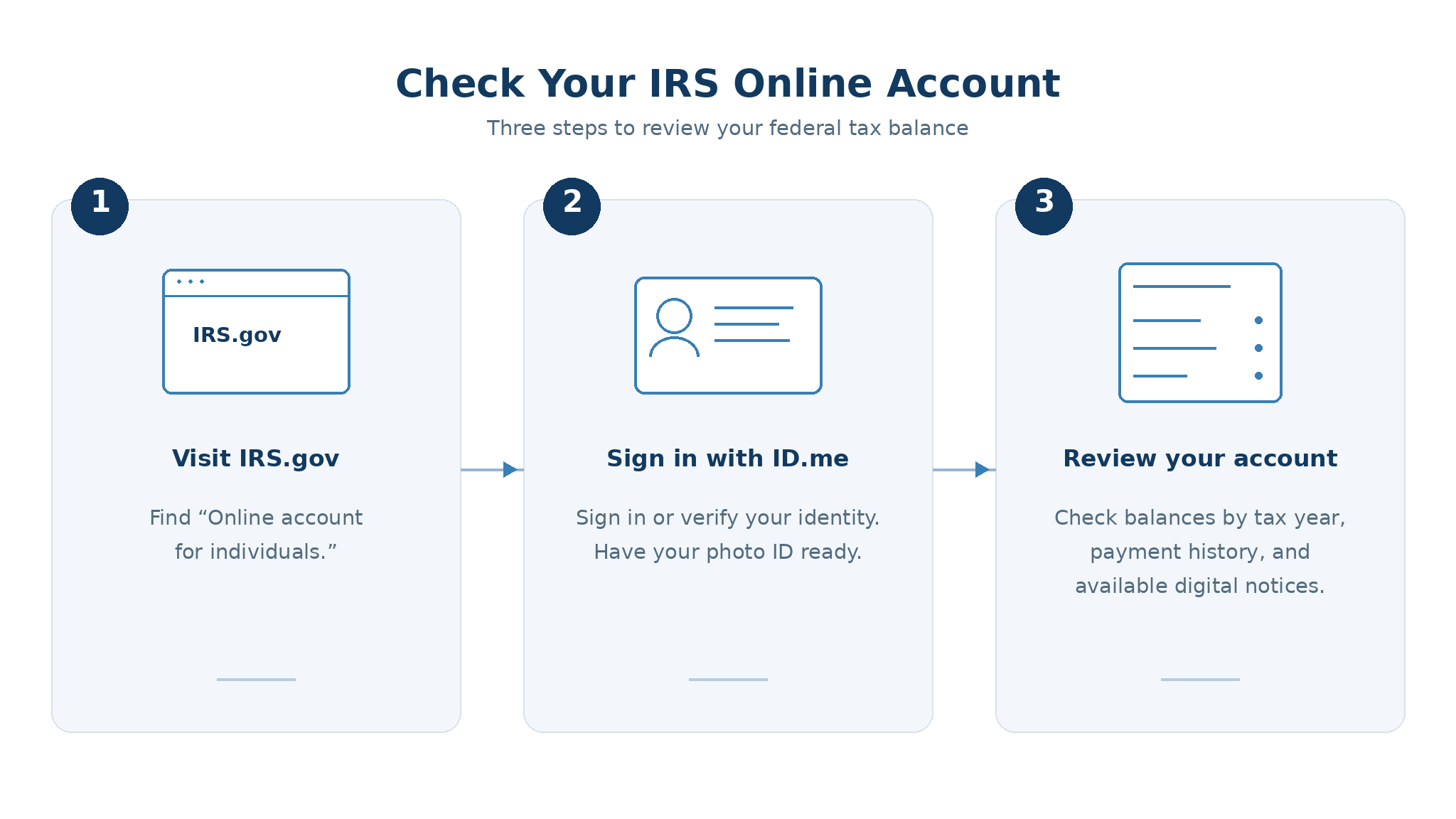
The simplest way to find out how much you owe the IRS is to sign in to your IRS Individual Online Account and review balances by tax year. If you cannot access it, you can use a tax account transcript, an IRS notice, or a call to the IRS. Checking is free and does not require a tax relief company.Amounts on a return, a notice, and your online account can differ, so identify the tax years involved and check whether recent activity has posted.
Review your balances by tax year, payment history, and digital notices.
The IRS says balances updateno more than once every 24 hours, and payments can take1 to 3 weeksto appear. Only select notices are available online. This covers your federal balance, not state tax debt, and an individual account does not show every business liability.
2. Review Your IRS Notices
A balance-due notice usually shows the tax year, the amount, the notice date, and how to pay or respond. A notice reflects the account as of that date, so later payments, adjustments, penalties, or interest may not appear. The IRS notes that a CP14D notice may not reflect a recent payment. Check your Online Account, and do not pay again if you already paid.
Not every notice is a bill. A CP14 generally says you owe on a filed return. A CP2000 is not a bill. It proposes changes to your return. Read each notice and decide whether you agree before paying. The IRS also explains how to read notices and letters.
3. Request a Tax Account Transcript
A tax account transcript shows basic data such as filing status, taxable income, payment types, and changes made after you filed. A tax return transcript is different. It shows your original return as filed and omits later changes (IRS transcript types).
You can view transcripts in your Online Account, order them by mail through Get Transcript, or call the automated line at 800-908-9946. Older years or non-1040 filers may need Form 4506-T. Mailed requests take time to arrive.
4. Contact the IRS if You Need Clarification
Call if your records differ from the IRS balance, a payment seems missing, a tax year is unavailable, or you need to know what it takes to resolve the balance.
The individual line is 800-829-1040, Monday through Friday, 7 a.m. to 7 p.m. local time, per the IRS Taxpayer Advocate Service.
You can also use the number on a legitimate notice.
Have your notices, tax years, returns, and payment confirmations ready.
! Never share personal information in comments or with unverified callers !
Why Might the Amount You Owe Have Changed?
Your balance can include original unpaid tax, penalties, interest, payments or credits, and IRS adjustments. Interest continues to accrue on unpaid amounts, so the total can change as activity is processed.
What If You Have Not Filed All Your Returns?
An online balance does not replace determining which required returns are missing. The IRS says to file all returns that are due, even if you cannot pay in full. A recently filed return may not be processed yet, and the displayed amount may not include unfiled years. If someone repeatedly does not file, the IRS may create a substitute return and send a notice of deficiency.
What Can You Do After Confirming the Balance?
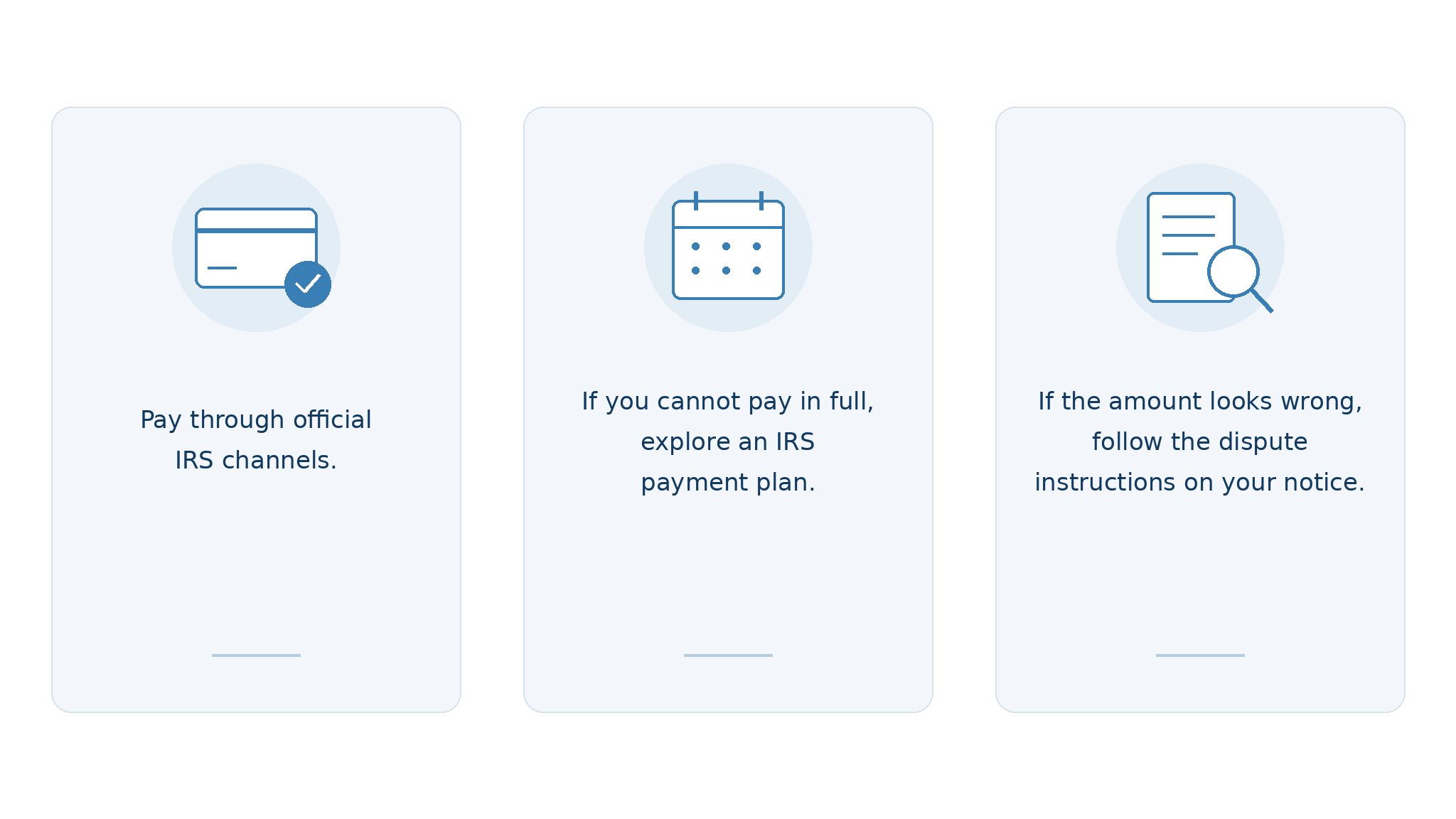
Other options, such as an offer in compromise, depend on eligibility, and approval is not guaranteed. A phone call, partial payment, or application does not automatically stop collection activity.
Get Help Understanding Your IRS Options
If you have confirmed your IRS balance but are unsure how to address it, America’s Choice Tax Relief can help you review your situation and understand the resolution options that may be available. Eligibility and outcomes depend on individual circumstances and applicable IRS requirements.
Can I find out how much I owe the IRS without an online account?
Yes. Order a tax account transcript by mail or phone, review your notices, or call the IRS.
Why does my IRS letter show a different amount from my online account?
The letter reflects the issue date. Payments, penalties, interest, and adjustments may have posted since.
Does a zero balance mean all my tax obligations are resolved?
Not necessarily. Unprocessed returns, unfiled years, or pending actions may not appear yet.
How can I confirm whether the IRS received my payment?
Check payment activity in your Online Account and your payment confirmation. Allow time for posting before calling.
Why am I getting a letter from the IRS in 2026? Learn common reasons, how to read your IRS notice number, verify it’s real, and choose your next steps.
Got an IRS letter about unfiled tax returns? Learn how CP59, CP63, and CP2566 notices differ and how to respond whether or not you were required to file.
Working from home doesn’t automatically mean a tax deduction or IRS debt relief. Learn what actually qualifies for W-2, self-employed & freelance workers.
The information provided in this article is for general informational and educational purposes only and does not constitute legal, tax, or financial advice. This content is not intended to replace professional advice from a qualified tax attorney, certified public accountant (CPA), or enrolled agent.
Tax laws and IRS policies are complex and subject to change, and individual circumstances vary. Any actions taken based on the information contained in this article are done at the reader’s own discretion and risk.
No attorney-client or professional relationship is created by reading or relying on this content. For advice specific to your situation, you should consult a qualified tax professional or legal advisor.
Get Your Tax Resolution Started with a FREE Consultation!