A direct way to find out if you owe the IRS money online is to go directly to IRS.gov, sign in to your Individual Online Account, and review your balance details by tax year. Checking is free. You do not need to hire a tax relief company to see what the IRS has on record for your federal tax account.
How to Check Whether You Owe the IRS Online
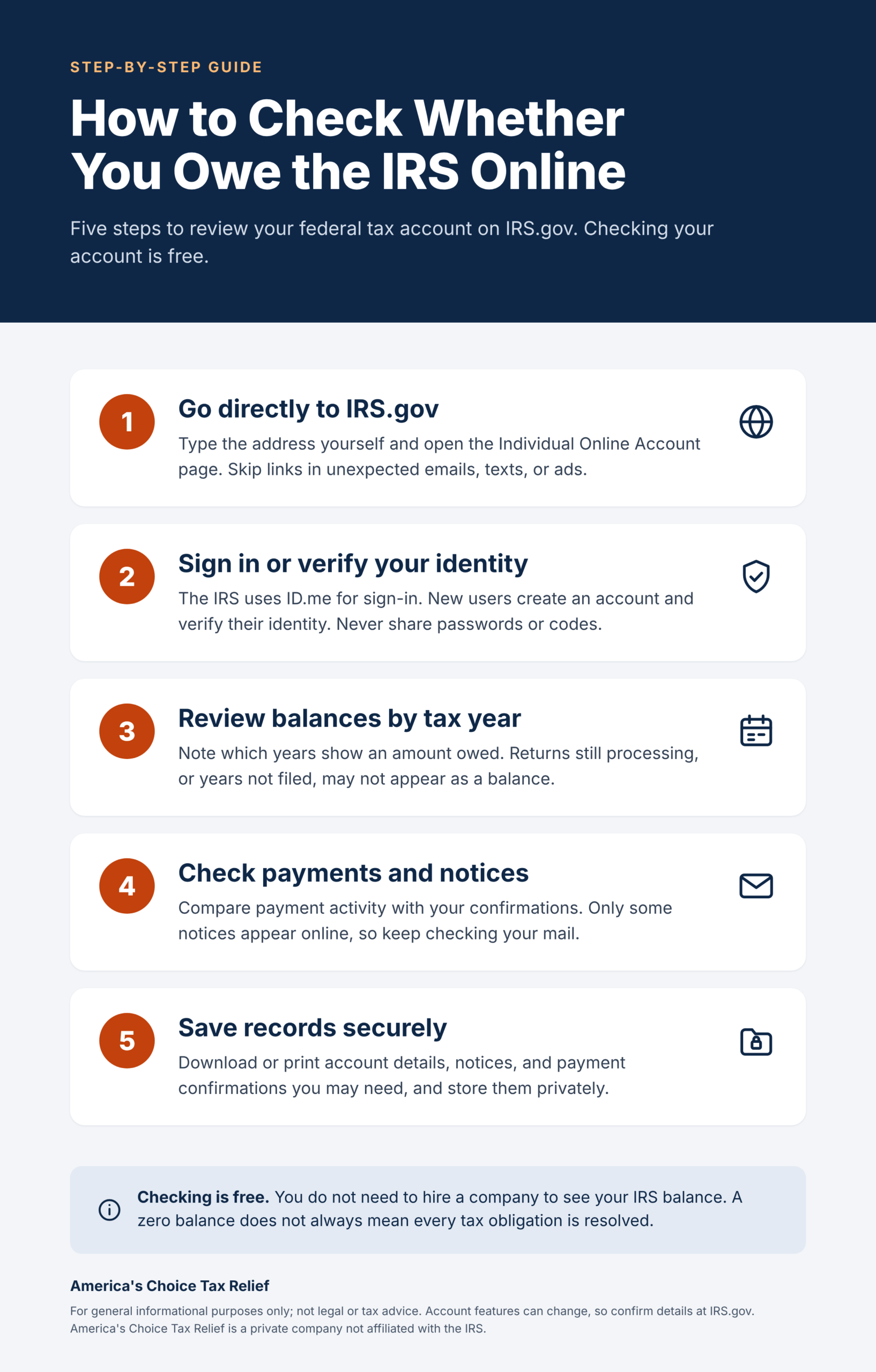
1.Go directly to IRS.gov. Type IRS.gov into your browser yourself and go to the Individual Online Account page. Don’t use links in unexpected emails, texts, or ads that offer to show your balance.
2. Sign in or verify your identity. The IRS uses ID.me for sign-in and identity verification. New users must create an ID.me account, verify their identity, and be 18 or older. If you already have an ID.me account from a state or federal agency, the IRS says you can sign in without verifying again. Never share your password or verification codes with anyone.
3. Review balances by tax year. Note which years show an amount owed and review the details available for each. According to the IRS Online Account FAQs, the account shows federal liabilities tied to your individual account, such as income tax owed on Form 1040. A return still being processed, or a year you have not filed, may not appear as a balance.
4. Review payment activity and available notices. Compare your payment activity with your own confirmations. Posting times vary by payment method. The IRS says card payments generally appear within one to two days, and checks can take up to three weeks.
Only a select number of notices are available online, so keep checking your mail. If a notice differs from what you see online, do not ignore it. Checking your account does not replace a notice’s response deadline.
5. Save relevant records securely. Download or print the account details, notices, and payment confirmations you may need, and store them privately.
What If Your Account Shows Zero or “Unavailable”?
These mean different things:
Zero balance:No balance is currently recorded. The IRS notes the amount reflects data available when you log in and can change after an adjustment or when a recently filed return posts.
Unavailable:The system cannot display certain information right now. The IRS says some features, like transcripts and payment activity, may still work.
No filing requirement:Whether you must file is a separate question that your balance does not answer.
A zero can also appear if you never filed a required return, a payment is still processing, or an adjustment is pending. A proposed change in a notice is different from an assessed balance. If something looks unclear, contact the IRS.
Does the Balance Include Penalties and Interest?
Your online balance may include tax, penalties, and interest. When reviewing a year, separate:
Original unpaid taxassessed for that year.
Penalties, such as late filing or late payment
Interest on unpaid amounts
Payments and creditsapplied to the year
Because the figure reflects data at the time you sign in, treat it as a snapshot rather than a guaranteed payoff amount. Interest and penalties may continue to accrue on unpaid balances.
Can a Tax Account Transcript Help?
Yes. A tax account transcript shows recorded activity for one tax year, including payments and later adjustments. A tax return transcript, by contrast, shows most line items from the return as originally filed.
The IRS cautions that transcripts may not show the most recent interest, penalties, adjustments, or pending actions, so they are not current payoff statements.
What If You Cannot Access Your Online Account?
Use the official ID.mehelp options linked from the IRS sign-in page.
Request an account transcript by mail through IRS.gov or with Form 4506-T.
Contact the IRS using the phone number on your notice or one you find on IRS.gov.
What Should You Do If You Owe Money?
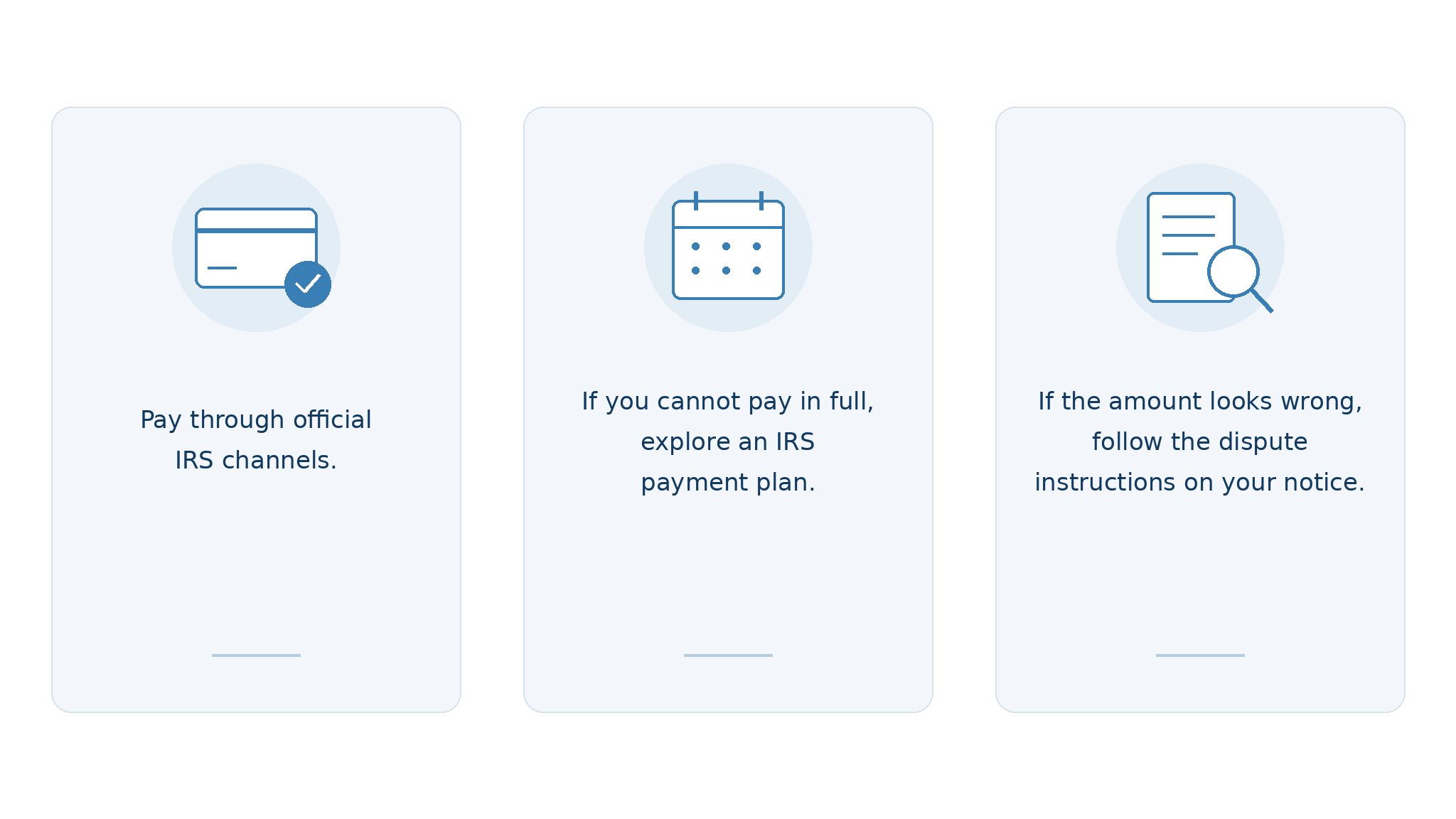
Other options, such as an offer in compromise, depend on eligibility, and approval is not guaranteed. A phone call, partial payment, or application does not automatically stop collection activity.
Get Help Understanding Your IRS Balance
If your IRS account shows a balance and you are unsure how to address it, America’s Choice Tax Relief can help you review your situation and understand the resolution options that may be available. Eligibility and outcomes depend on individual circumstances and applicable IRS requirements. America’s Choice Tax Relief is a private company not affiliated with the IRS.
Is checking my IRS balance online free?
Yes. Signing in to your Individual Online Account on IRS.gov costs nothing.
Does my IRS account show state tax debt?
No. Your IRS Online Account covers federal taxes only. Contact your state tax agency for state balances.
Why is a recent payment not showing?
How long does a payment take to post depends on the payment method, and checks take the longest. Keep your confirmation.
Does a zero balance mean I do not owe any taxes?
Not necessarily. Unfiled returns, returns that haven’t posted yet, and pending adjustments may not be reflected.
Learn how to check your IRS balance by tax year using your Online Account, notices, transcripts, or a phone call, and what to do after you confirm the amount.
Why am I getting a letter from the IRS in 2026? Learn common reasons, how to read your IRS notice number, verify it’s real, and choose your next steps.
Got an IRS letter about unfiled tax returns? Learn how CP59, CP63, and CP2566 notices differ and how to respond whether or not you were required to file.
Working from home doesn’t automatically mean a tax deduction or IRS debt relief. Learn what actually qualifies for W-2, self-employed & freelance workers.
The information provided in this article is for general informational and educational purposes only and does not constitute legal, tax, or financial advice. This content is not intended to replace professional advice from a qualified tax attorney, certified public accountant (CPA), or enrolled agent.
Tax laws and IRS policies are complex and subject to change, and individual circumstances vary. Any actions taken based on the information contained in this article are done at the reader’s own discretion and risk.
No attorney-client or professional relationship is created by reading or relying on this content. For advice specific to your situation, you should consult a qualified tax professional or legal advisor.
Get Your Tax Resolution Started with a FREE Consultation!